Healthy trees look effortless, but they are anything but. On a calm day you can forget the wind-load calculations that a mature oak faces or the quiet battle its roots wage for oxygen under compacted soil. Bring in an early snowstorm, a week of wildfire smoke, or a backyard addition that shaves a few inches off the grade, and suddenly the arboricultural decisions you postponed become urgent. A Certified Arborist Consultation anchors those decisions in science and experience, then translates them into practical steps that fit your property, budget, and risk tolerance.
What a certified arborist actually brings to the table
Credentials matter in tree care for the same reason they matter in electrical work. Trees are living structures with physics and pathology intertwined. A certified arborist has been vetted on tree biology, pruning standards, rigging, soil science, and risk assessment, and is required to keep learning. That foundation helps separate a cosmetic trim from Tree Pruning & Crown Shaping that preserves structure, or a hasty felling from Dangerous Tree Assessment and Removal that prioritizes safety and environmental responsibility.
The value shows up in the small choices. On a site visit, I might flag a slight bulge in the trunk flare that hints at a girdling root, or note the asymmetry that a previous topping cut created. I will watch how the canopy moves in a light breeze, compare leaf size to known norms for the species, and dig my finger into the mulch to feel whether the soil is hydrophobic. None of that reads as dramatic, but the accumulated observations guide the plan.
What a thorough consultation looks like
An effective Certified Arborist Consultation follows a pattern, but never a script. I start by asking how you use the space. Are the kids’ swings under that maple every weekend, or is the patio the hub? Is the neighbor’s driveway within the driplines? The human context sets the risk threshold.
We walk the site together. I prefer to see the trees from multiple angles, and in different light if possible, because glare and shade play tricks on the eye. I bring a simple kit: a mallet for sounding cavities, a probe for soft spots, binoculars, a shovel for shallow soil checks, and if needed a resistograph or sonic tomograph for advanced decay assessment. For most properties, visual and tactile inspection get us 80 percent of the way.
Measurements and notes follow. I document species, diameter at breast height, crown spread, and visible defects or stressors. I check root collar depth, look for included bark in unions, and evaluate clearance from roofs, chimneys, and lines. If there is recent construction, I hunt for grade changes, trench lines, and compaction paths.
For risk, I use a standard matrix that weighs the likelihood of failure, the likelihood of impact, and the targets beneath. A long low branch over lawn furniture reads differently than a heavy overextended limb above the public sidewalk. Where risk is nontrivial, I outline options from pruning to Tree Cable and Bracing to removal.
You get a plain-language report with photos, findings, maintenance priorities, and a timeline. I prefer timeframes in seasons rather than vague soon. For example, reduce end weight on the south lead by 20 to 25 percent this winter, reevaluate after leaf-out in late spring, install a supplemental cable at 2.5 times the branch diameter by midsummer if movement remains excessive. Costs are itemized with ranges, because tree work often meets reality in the first cut.
Pruning and crown shaping, done with intent
Tree Pruning & Crown Shaping is not about making a tree smaller at all costs. It is about setting or restoring structure so that the tree bears wind and snow with less strain, carries foliage without shading itself out, and clears the spaces humans need. Good pruning works with the tree’s biology. We follow branch collar anatomy, keep live crown ratio in healthy ranges, and aim reductions at lateral branches at least one third the diameter of the removed leader.
Timing varies. Most deciduous species tolerate winter pruning well, which reduces pest transmission and gives a clear view of structure. Spring-blooming ornamentals prefer post-flower cuts. Maples and birches bleed in late winter, which is unattractive but not harmful, though I still often shift them to late spring. For conifers, I avoid taking more than the past year’s growth on leaders to prevent disfigured shapes.
Topping, lion-tailing, and flush cuts create long-term problems. You trade a short-term size reduction for weak sprout growth and decay vectors. If sightlines or solar panels need clearance beyond what good reductions can provide, we discuss species replacement. It is a straight conversation about aesthetics, function, and safety.
When removal is the responsible choice
No one hires me hoping to hear remove it, and I do not suggest it lightly. Dangerous Tree Assessment and Removal rests on evidence. I am looking for advanced decay that compromises residual wall thickness, active root plate movement, severe lean with poor taper, progressive crack propagation, or pest complexes that have pushed beyond viable treatment. I consider site factors too. A hollowed willow in a windswept corner beside a garage is a different case than the same willow standing amid open lawn far from targets.
Permitting and notifications often come into play, especially in urban districts with protected species lists or heritage tree ordinances. A certified arborist can navigate the paperwork, provide the documentation it requires, and outline temporary mitigation if a permit review delays the schedule. If removal proceeds, Tree Removal Services focus on protecting structures and soil. I plan for rigging anchors, drop zones, load paths, and equipment access that avoids unnecessary compaction. Where cranes are involved, we schedule traffic control and utility locates in advance.
The stump is not an afterthought
Stump Removal & Grinding has more nuance than a quick pass with a grinder. Species matter. Poplar and willow will sucker aggressively from remnant roots if the stump is not ground wide and deep enough. In clay soils I aim for grinding to 8 to 12 inches, more if a replant is planned. Buried utilities, irrigation lines, and property boundaries shape the footprint. Clean up is part of the craft. I separate chips if you want them for mulch, or haul them off if you plan to re-sod, then backfill with a soil blend that will not settle into a trip hazard.
Support systems that buy time, not miracles
Tree Cable and Bracing has a place when a tree has sentimental or canopy value and retains enough structural integrity to justify preservation. Dynamic cabling, placed high and slightly inside the crown edge, reduces peak loads and limits sudden limb separation. Static cabling and bracing rods address more immediate defects like a split union with included bark. I explain the limitations plainly. Hardware does not remove decay, it redistributes stress. Supported trees require periodic inspections, and every installation needs a record of hardware specifications, placement heights, and inspection dates. If a client cannot commit to that diligence, we look at different options.
A memorable case involved a mature copper beech with a co-dominant union and a playground beneath. We installed twin static cables at two-thirds of total height, added a through-rod at the union, and combined the work with a 15 percent end-weight reduction on both leads. That bought the beech another decade of safe service before a planned replacement took over the canopy role.
Storms do not wait for business hours
Emergency Tree Services are about triage, not tidy work sites. When straight-line winds push a red oak onto a roof at midnight, my first move is to stabilize the situation. We set temporary supports, stop further damage, and keep people safe. Night operations rely on floodlights, spotters, and strict communication protocols. Insurance adjusters want photos and measurements, which we document as we go. Final pruning, replanting, and aesthetics come after the site is secure. The best emergency response is often an earlier maintenance plan that avoided the emergency entirely, but once things break, speed and judgment matter more than elegance.
FireSmart thinking for a changing climate
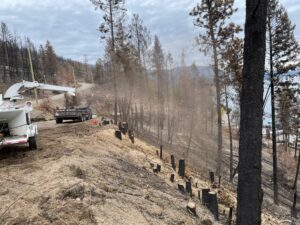
FireSmart Tree Services adapt tree care to wildfire reality. Defensible space is not a moonscape. It is strategic spacing, species selection, and fuel management that reduces ignition risk and slows fire spread. Around structures, I look for ladder fuels that can carry flame into canopies, resinous shrubs tucked under eaves, driplines clogged with needles, and woodpiles against fences. Thinning conifer stands, raising crowns moderately to interrupt vertical fire paths, and favoring broadleaf species near buildings are standard tools. Pruning schedules shift to remove deadwood before peak fire season. Where clients want the look of evergreens close to a home, we discuss setback distances and maintenance commitments. It is always a balance, but small changes like a 5 to 10 foot noncombustible zone next to siding dramatically alter risk.
Roots, soil, and the quiet half of a tree’s life
Most tree problems begin belowground. Compaction from foot traffic or equipment cuts off oxygen and water, and roots respond by dying back or surfacing in search of air. During a consultation I pay attention to the dripline edges and the spaces where cars park on the lawn during holidays. Mulch tells a story. A thin, even layer of wood chips, two to four inches deep, ending a few inches from the trunk, supports fine roots and suppresses weeds. A volcano of mulch up the trunk does the opposite, keeping the bark wet and encouraging decay and rodents.
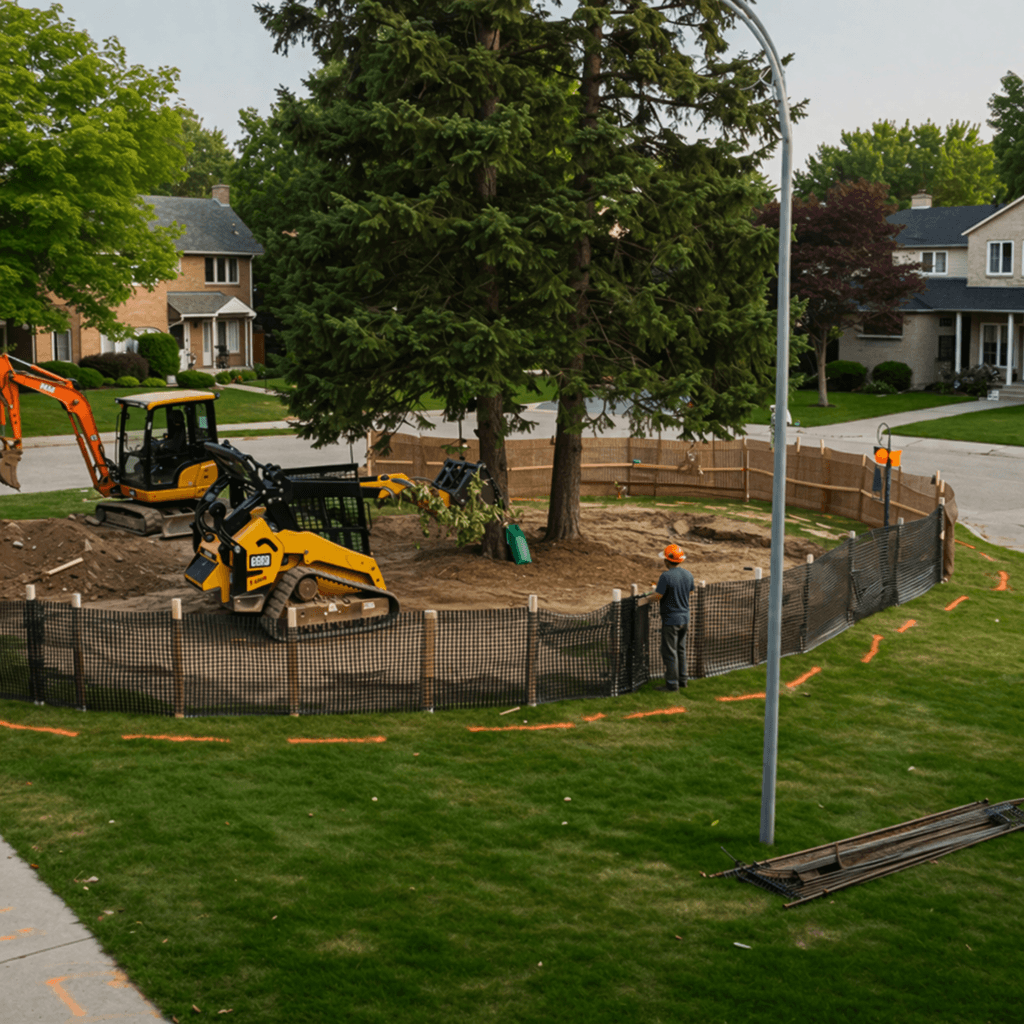
Where soil conditions are poor, air excavation, often called air spade work, exposes the root flare without cutting roots. We can correct grade issues, treat girdling roots, and backfill with a more porous mix. Irrigation needs change as trees mature. Many homeowners water lawns daily and trees rarely, which trains roots to stay shallow. Deep, infrequent watering, adjusted for species and soil, fosters resilience. An arborist can help set a schedule that reflects local evapotranspiration rates rather than guesswork.
Construction near trees, the highest stakes scenario
Nothing tests tree resilience like renovation or new construction. The root protection zone for many mature trees extends well beyond the canopy edge, and trenching within it can sever a high percentage of absorbing roots. A standard pre-construction consultation identifies trees to preserve, sets tree protection fencing at appropriate distances, and maps no-disturb zones for equipment and materials. Where work must encroach, we plan root pruning with clean cuts before excavation, instead of ripping roots with a bucket. We protect soil with mats, insist on spoil stockpiles outside critical areas, and schedule a site arborist to monitor grading and utility installation. These steps feel inconvenient on tight timelines, but they prevent the slow decline that appears three to five years after your dream addition.
Pests, pathogens, and the long game
Integrated pest management starts with proper identification. I look for the pattern first. Chewing damage, stippling, sooty mold, leaf spot margins, galleries beneath bark, exit holes, and frass each point to different culprits. Some issues are cyclical and cosmetic, requiring nothing but patience and pruning, like minor leaf miners in healthy birches. Others, such as certain borers in stressed ash or bark beetles in droughted conifers, demand rapid action or preemptive treatment. Fungal decay at the base with a distinct conk shape, like Armillaria or Ganoderma, shifts the conversation toward risk. The goal is not to spray at the first sign of trouble but to combine cultural practices, sanitation, pruning, biological controls where appropriate, and targeted treatments when thresholds are met. Your consultation report should separate must-do items from watch-list issues and explain why.
Budgeting, scheduling, and getting real about costs
Tree care is most https://brooksgtrb571.yousher.com/tree-cable-and-bracing-for-multi-stem-stabilization affordable when it is planned. I like to set a three to five year maintenance cycle for properties with multiple large trees. Year one might handle structural pruning on the highest risk specimens and Stump Removal & Grinding where removals already occurred. Year two addresses mid-priority reductions and minor cabling. Year three invests in soil work and FireSmart adjustments. Spreading the load keeps surprises rare and invoices predictable.
Costs vary widely by region and tree size, but a realistic range helps planning. A straightforward prune on a small ornamental may sit in the low hundreds, while a technical removal over a glass sunroom with a crane climbs into the several thousands. Cables and braces add material and inspection costs over time. A Certified Arborist Consultation fee often credits back if you move forward with the recommended work, which keeps the focus on building a relationship, not selling a one-off job.
How to prepare for a productive visit
A little preparation multiplies the value of the time on site. It helps to gather background, clear access, and set priorities before the arborist arrives. Use this short checklist to make the most of your appointment:
- Note changes over time, such as branch dieback after last summer’s heat or mushrooms at the base each fall. Mark underground utilities you know about, including irrigation and lighting runs. Think through your goals, like opening views, creating shade over a patio, or improving wildfire resilience. Share constraints, such as property lines, neighbor concerns, or permit deadlines. Make space for equipment access, including side gates and driveways, and secure pets.
The consultation process, step by step
People often ask what happens between the first call and the last cut. Here is a straightforward sequence that keeps projects smooth:
- Initial call or email to define scope, share photos, and schedule the site visit. On-site assessment with you present, covering tree health, structure, targets, and your use of the space. Written report with prioritized recommendations, timelines, and a proposal with ranges. Permitting or utility locates where applicable, followed by scheduled work dates. Post-work walkthrough, care instructions, and calendar reminders for follow-up inspections.
A quick story that shows the difference
A few summers ago, a client called about a leaning spruce beside a lakeside cabin. The lean had been there for years, but a wet spring made it feel worse. Most bids they received were for immediate removal. On site, the spruce had a slight lean that predated the deck construction, but the soil told the story. Saturated, compacted, and capped with landscape fabric, it starved the roots of air. The trunk sounded solid, and the root plate showed no lift. We set a plan to aerate with an air spade, amend the top 8 inches with coarse wood chips, remove the fabric, and install a discreet guy system for one season while roots recovered. We trimmed a few wind-catching laterals and set a reevaluation for fall. Three months later, the spruce stood firm, the guy came off, and we set a schedule for annual inspections. That project cost less than half of the removal and replanting path, and it kept the cabin’s windbreak intact.
Where removals and preservation meet
There are times when a mixed approach is best. You might remove a hazardous cottonwood that keeps dropping heavy deadwood by the driveway, then invest those savings in a crown reduction and cable on a legacy maple that shades the house. You might clear out ladder fuels near the porch as part of FireSmart Tree Services, then plant a low flammability understory of native perennials and a deciduous replacement for the conifer you removed. The point is not to choose preservation or removal as a philosophy, but to apply both tools to build a resilient, beautiful landscape.
Working with the right professional
Good arborists listen first. They explain options, cite standards when needed, and make trade-offs visible. They know when a small Tree Pruning & Crown Shaping will meet your goals, and when it is time to plan Dangerous Tree Assessment and Removal with a crane and traffic control, or when Tree Cable and Bracing earns its keep. They respond quickly when you need Emergency Tree Services, yet keep pushing maintenance that reduces those emergencies. They understand FireSmart Tree Services as habitat friendly, not habitat empty. They price transparently, carry proper insurance, and welcome your questions.
Trees anchor a property for generations. A Certified Arborist Consultation aligns the day-to-day care, the one-off decisions, and the long view into a coherent plan. With that plan, you spend less time worrying about the next windstorm or the neighbor’s fence, and more time enjoying shade, birdsong, and the quiet confidence that your trees can handle what the next season brings.
Ace Tree Services Ltd.
Name: Ace Tree Services Ltd.Address: 4656 Wallace Hill Road, Kelowna, BC
Postal code: V1W 4C2
Phone: 250-212-9593
Website: https://acetree.ca/
Hours:
Monday: 7:00 AM - 5:00 PM
Tuesday: 7:00 AM - 5:00 PM
Wednesday: 7:00 AM - 5:00 PM
Thursday: 7:00 AM - 5:00 PM
Friday: 7:00 AM - 5:00 PM
Saturday: 7:00 AM - 5:00 PM
Sunday: Closed
Open-location code (plus code): RHF8+8G Kelowna, British Columbia, Canada
Map/listing URL: https://www.google.com/maps/place/Ace+Tree+Services+Ltd./@49.8232606,-119.4337283,659m/data=!3m2!1e3!4b1!4m6!3m5!1s0x537d8b1d074815c5:0x450b88afa7a41435!8m2!3d49.8232606!4d-119.4337283!16s%2Fg%2F11ydkpnh22
Embed iframe:
"@context": "https://schema.org", "@type": "HomeAndConstructionBusiness", "name": "Ace Tree Services Ltd.", "url": "https://acetree.ca/", "telephone": "250-212-9593", "address": "@type": "PostalAddress", "streetAddress": "4656 Wallace Hill Road", "addressLocality": "Kelowna", "addressRegion": "BC", "addressCountry": "CA" , "openingHoursSpecification": [ "@type": "OpeningHoursSpecification", "dayOfWeek": "https://schema.org/Monday", "opens": "07:00", "closes": "17:00" , "@type": "OpeningHoursSpecification", "dayOfWeek": "https://schema.org/Tuesday", "opens": "07:00", "closes": "17:00" , "@type": "OpeningHoursSpecification", "dayOfWeek": "https://schema.org/Wednesday", "opens": "07:00", "closes": "17:00" , "@type": "OpeningHoursSpecification", "dayOfWeek": "https://schema.org/Thursday", "opens": "07:00", "closes": "17:00" , "@type": "OpeningHoursSpecification", "dayOfWeek": "https://schema.org/Friday", "opens": "07:00", "closes": "17:00" ], "geo": "@type": "GeoCoordinates", "latitude": 49.8232606, "longitude": -119.4337283 , "hasMap": "https://www.google.com/maps/place/Ace+Tree+Services+Ltd./@49.8232606,-119.4337283,659m/data=!3m2!1e3!4b1!4m6!3m5!1s0x537d8b1d074815c5:0x450b88afa7a41435!8m2!3d49.8232606!4d-119.4337283!16s%2Fg%2F11ydkpnh22"
Ace Tree Services Ltd. provides professional tree removal, pruning, stump grinding, emergency response, and arborist consultations for properties in Kelowna and across the Okanagan Valley.
The company works with homes, commercial properties, and municipal settings where tree work needs to be planned carefully around buildings, fences, driveways, landscaping, and other site constraints.
Based in Kelowna, the team is positioned to help nearby neighbourhoods and surrounding Okanagan communities with routine tree care and time-sensitive storm cleanup.
Customers looking for careful tree work often want a crew with certified arborist training, insurance, and a methodical approach to higher-risk removals.
Services also include dangerous tree assessment, cabling and bracing, and wildfire risk reduction tree work for properties that need longer-term planning.
To request a quote or discuss tree care options, call 250-212-9593 or visit https://acetree.ca/.
A public map listing is available to help customers confirm the business location and get directions before a site visit or estimate.
For Kelowna property owners who need pruning, removals, or emergency tree help, a local tree service can make it easier to schedule site-specific recommendations and cleanup.
Popular Questions About Ace Tree Services Ltd.
What services does Ace Tree Services Ltd. provide?Ace Tree Services Ltd. lists tree removal, stump removal and grinding, tree pruning and crown shaping, emergency tree service, arborist consultation, dangerous tree assessment and removal, cabling and bracing, and wildfire risk reduction tree work.
Who does Ace Tree Services Ltd. serve?
The company describes its work as serving homes, businesses, and municipalities in Kelowna and across the Okanagan Valley.
Is emergency tree help available?
Yes. Emergency service is listed for downed or uprooted trees, dangerous tree assessment, stabilization work, and branch cleanup. If a tree is near power lines, the safest first step is to stay clear and contact the utility provider before any tree work begins.
Do I always need a permit to remove a tree?
Not always. Permit requirements can depend on where the tree is located and whether it is near a creek, lake, steep slope, or another protected area. It is best to check local rules for the specific property before removal work starts.
How deep does stump grinding usually go?
Standard stump grinding is typically described as going about 6 to 12 inches below ground level, which is often enough for grass or surface landscaping. Deeper grinding may be possible when site plans call for it.
How much of a tree can be safely removed at one time?
That depends on the species, age, health, and structure of the tree. In practice, good pruning is usually about removing the right limbs for health, clearance, and structure rather than chasing a fixed percentage.
What are common signs that a tree may be dangerous?
Large dead limbs, visible cracks, a new lean, root damage, canopy dieback, or storm-related damage can all be warning signs. Trees near structures deserve extra attention when any of those issues appear.
What is cabling and bracing in tree care?
Cabling and bracing are support systems used to reduce the risk of failure in trees with structural weaknesses that may still be worth preserving. They are generally used to add support, not to replace good assessment and ongoing maintenance.
How do I contact Ace Tree Services Ltd.?
Call 250-212-9593.Website: https://acetree.ca/.
Landmarks Near Kelowna, BC
Downtown KelownaThe downtown core is a practical reference point for lakefront neighbourhoods, mixed-use streets, and central residential properties. If your property is near downtown, tree pruning, removals, and cleanup can be planned around tighter access and nearby structures.
Knox Mountain Park
This well-known park north of downtown is a recognizable landmark for nearby homes and hillside properties. If you are close to this area, ask about tree assessment, trimming, or removal work suited to sloped sites.
Mission Creek Greenway
The greenway runs through several parts of Kelowna and is a useful landmark for nearby residential areas. If your property borders or sits near this corridor, site-specific tree planning is especially important.
Pandosy Village
Pandosy is one of Kelowna’s most recognizable neighbourhoods and a common reference point for south-central properties. If you are nearby, request help for pruning, removals, or storm cleanup around homes and small commercial sites.
Rutland
Rutland is a major east Kelowna neighbourhood with a mix of residential and local commercial properties. If you are located in or near Rutland, tree work can be scheduled for both routine maintenance and urgent situations.
Landmark District
This central business-focused area is a practical landmark for offices, service properties, and nearby residential streets. If your site is near the district, ask about careful tree work around parking, access lanes, and built-up lots.
Kelowna’s North End
The North End sits on the edge of downtown and is a useful reference for nearby homes, industrial sites, and commercial properties. If you are in this part of the city, request tree care based on the layout and constraints of the lot.
Airport District
The Airport District is a recognizable north Kelowna reference point for surrounding properties and access routes. If you are in this area, ask about tree services for residential acreage, commercial sites, or roadside cleanup needs.
Glenmore & Dilworth
These established Kelowna neighbourhoods are useful landmarks for central and north-central service calls. If your property is nearby, pruning and removal work can be tailored to mature trees and established landscapes.
Highway 97 Corridor
Highway 97 is one of the city’s main travel routes and a common way to describe location within Kelowna. If your home or property is just off the corridor, a clear landmark reference can help speed up quote scheduling and site planning.